Washing your car? Don't make these 5 mistakes! Part 2
Your car is already clean, but is it really ready for a show? In this part, we focus on the details that make a car look like it just left a professional detailing studio, rather than just being "rinsed at a touchless wash".
1. Lack of chemical and mechanical decontamination
Even after hand washing, the paintwork can feel rough to the touch. This is due to embedded metal shavings from brake pads (fallout/iron dust) and spots of tar and asphalt. Applying wax to such a surface is a mistake - the wax will not bond with the paint and will wear off after two washes.
How to do it right: Once every few months, perform a full decontamination. Use an iron remover (a "bleeding wheel" product, but safe for paint) and a Tar & Glue Remover. Finally, you can use a clay bar with an appropriate lubricant to make the paint perfectly smooth.
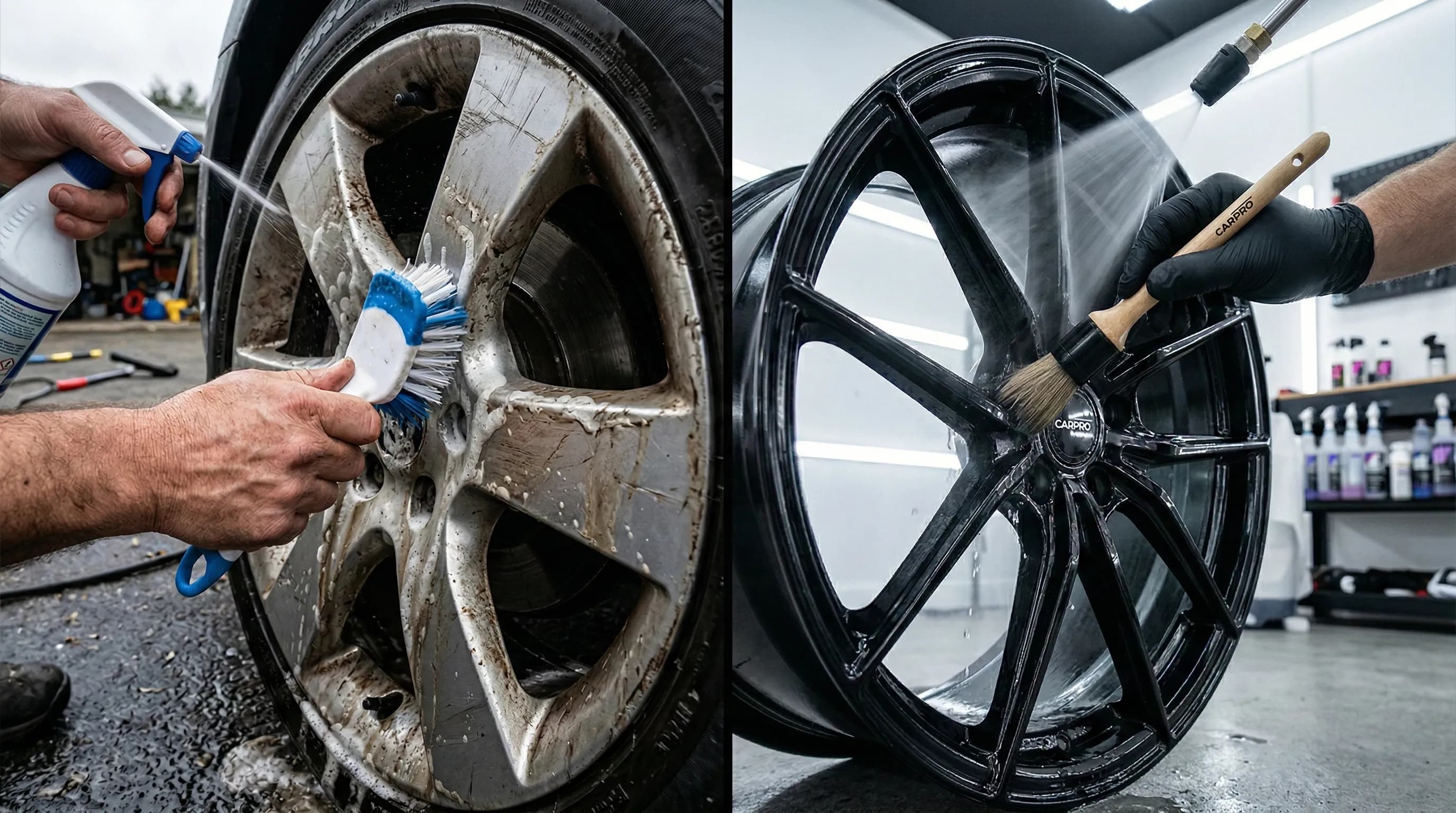
2. Using overly aggressive wheel cleaners
Many cheap wheel cleaners are based on strong acids. They are effective, but with regular use, they destroy the clear coat on the wheels, can cause corrosion of bolts, and dull the brake calipers.
How to do it right: For regular washing, use products with a neutral or slightly alkaline pH. Leave aggressive chemicals only for wheels that haven't been washed in years. Remember to always clean wheels when they are cold - never after a long drive!
3. Applying too thick layers of wax
A rookie mistake: "the more I apply, the better it will protect". Nothing could be further from the truth. The paint only accepts a microscopic amount of wax; the rest remains on the surface as a greasy layer that is very difficult to buff off. The result is streaks, so-called holograms, and rapid dust attraction.
How to do it right: Apply wax thinly, almost like a mist. Use a dedicated foam applicator. If, after applying the wax, you have difficulty buffing it with a microfiber cloth, it means you applied too much or waited too long.
4. Excessive interior shining (The "Plak" Effect)
Using silicone-based products on the dashboard is a detailing sin. The surface becomes greasy, shines unnaturally, and reflects in the windshield, which hinders driving. Worse, such products attract dust like a magnet.
How to do it right: Use Interior Dressing products with a matte or satin finish. They restore plastics to their factory color, protect against UV rays, and have antistatic properties, so dust settles much more slowly.
5. Skipping details - door jambs and seals
You can have perfectly shiny paint, but if, upon opening the doors, the jambs are dirty and green residue is visible in the emblem crevices, the effect is ruined. Forgetting about rubber seals also causes them to perish and lose color faster.
How to do it right: During the pre-wash, use a detailing brush and an APC (All Purpose Cleaner) to clean badges, grilles, and door jambs. Finally, protect the exterior seals with a dedicated rubber dressing – they will regain their deep black color and won’t freeze in winter.